My own private Backrooms
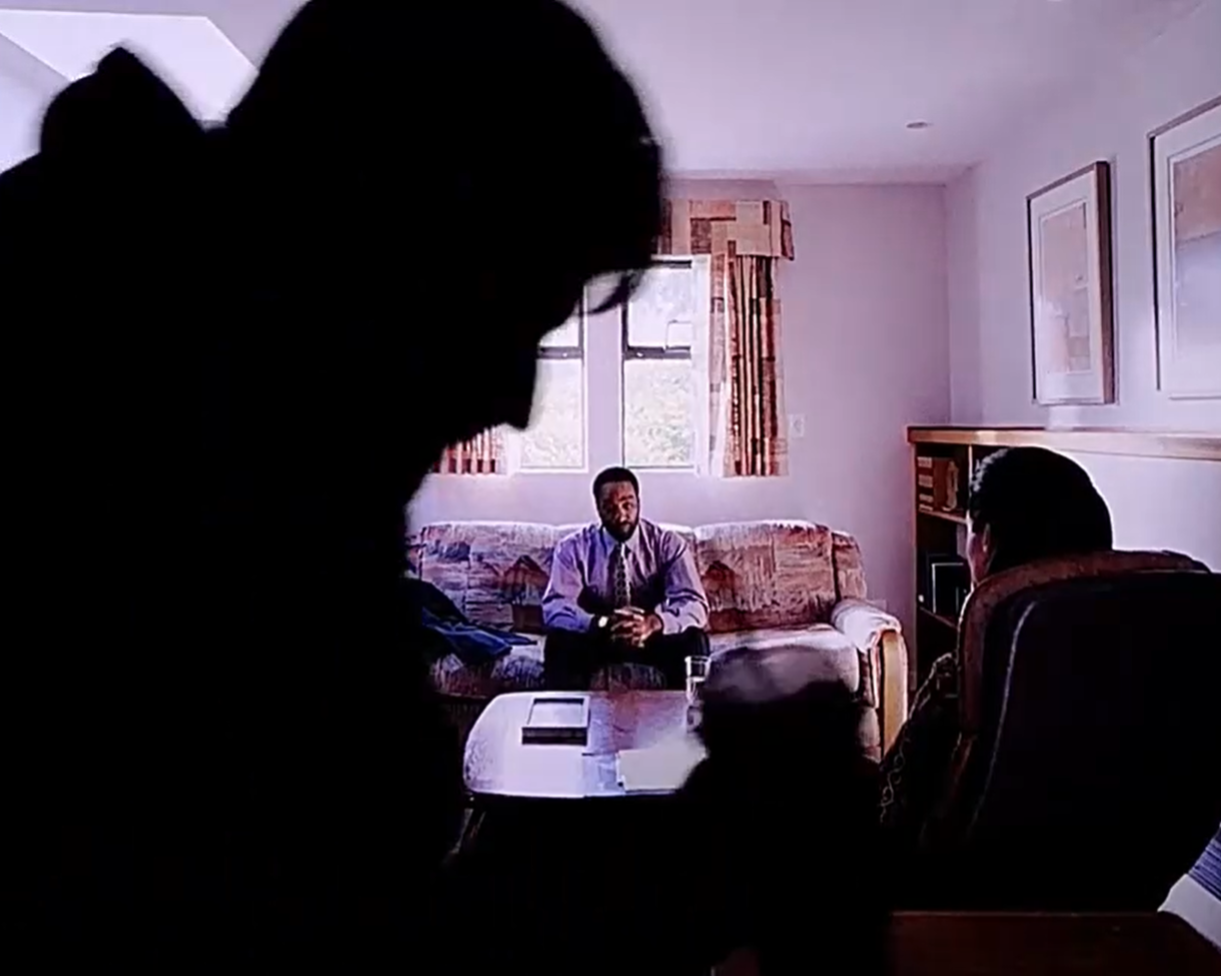
A cam rip of Backrooms featuring some bonus entities. Kane Parsons, 2026
It’s Saturday night and all I wanna do is watch Backrooms for the third time. The first time I saw it at the cinema I was so excited for everyone else to watch and be enthralled too. I wanted to write a big defensive essay explaining how it transcends the source material and is actually a serious film that everyone should go see. But then as I talked to people over the weeks I found that no one really got as much out of it as me. I don’t think they were missing anything in terms of understanding or interpretation, it just didn’t hit for them in the same way. That’s fine, I’m not mad that someone made a perfect film for me.
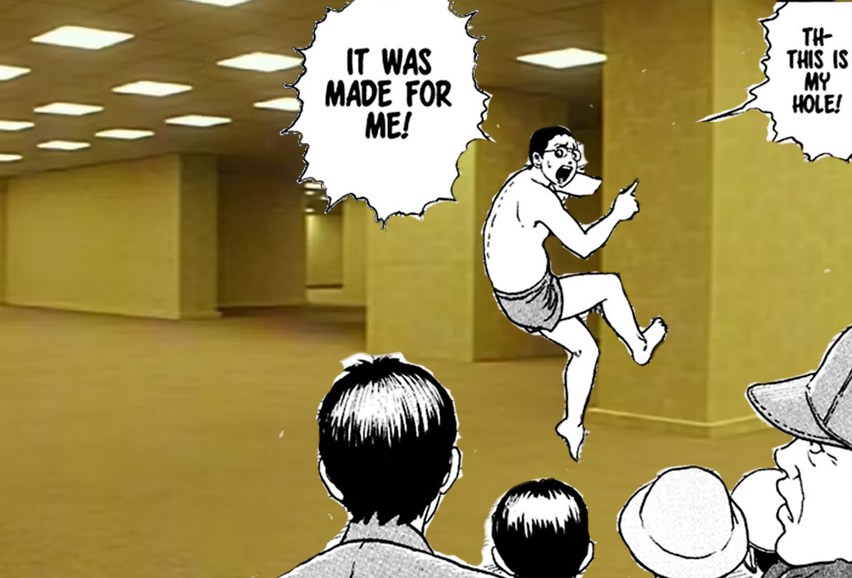
Part of why I was so ready to fight for this film was that I knew a lot of people would create content about it in the format of explainers, easter eggs reveals and lore deep dives. I don’t like that shit. Once I unmatched a guy (hot and the same age as me) because he said he watched Youtube explainer videos immediately after finishing a book. Of course I’ve been curious before and looked up what other people think the ending of a movie means, but you should probably do your own thinking for a bit first. It’s severely videogame-brained to jump straight to more content that simulates the experience of reflection and understanding for you. The tropes that annoy me so much (10 Things You Might Have Missed!) reduce engagement with art to a dim flickering in the brain’s reward circuits as all of the clues are revealed and the points are collected.
Some viewers would be primed to respond this way to Backrooms the film because Backrooms the genre already has an existing fandom and content spinning off in all directions. There are several Backrooms videogames, the Backrooms webseries that the director of the film made previously, other webseries by other creators, the Poolrooms subgenre (no relation to The Castle), Backrooms as a meme, Backrooms as a creepypasta, Backrooms as the subject of spooky stories on Reddit. The film is very much enmeshed in a media environment where interesting concepts are widely adopted, perhaps even squeezed to pulp, because there’s a low threshold of participation to keep creating iterations of and responses to the idea. This can get a bit tedious.
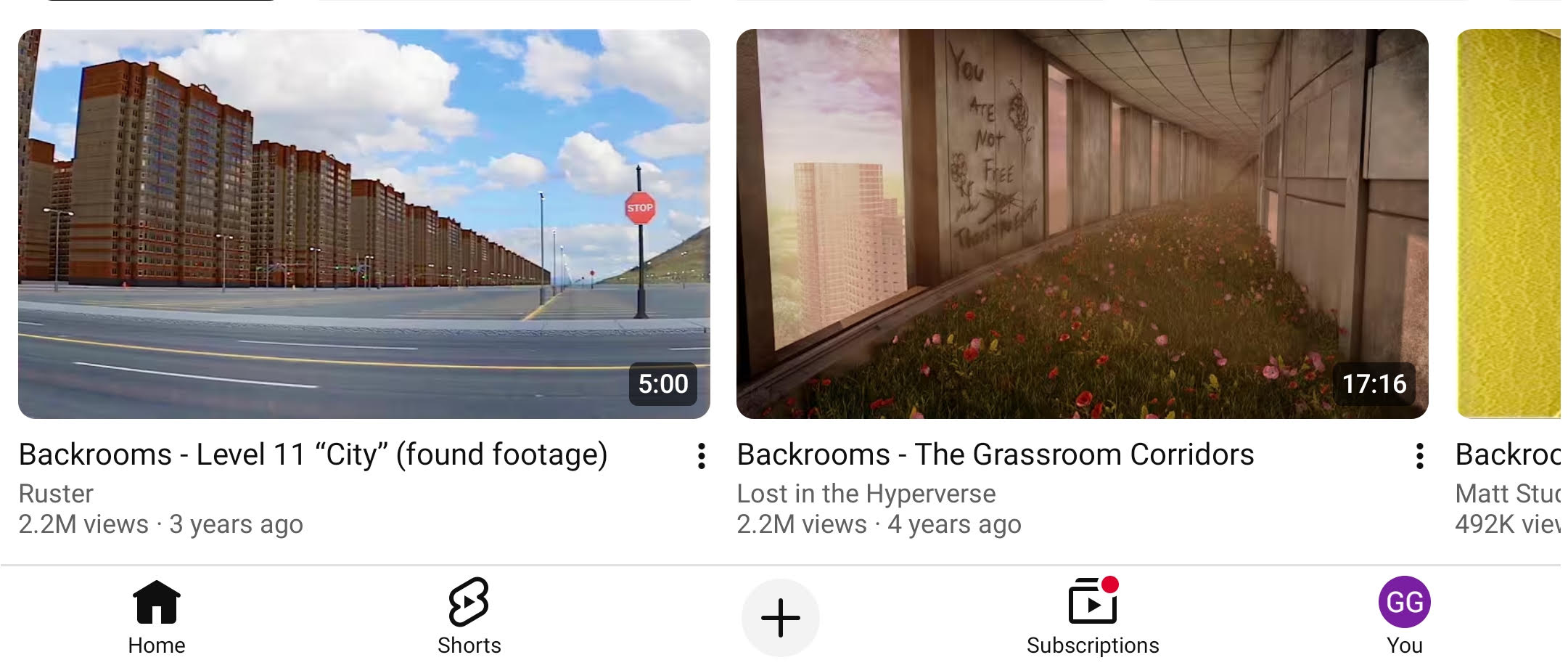
But what if these content ecosystems exist because there’s something really powerful that they draw from? The ephemeral junk is produced because it gets views and engagement, and it gets views and engagement because people get hooked on the ideas. People like me! I’ve been watching found footage style Backrooms videos with no plot while procrastinating writing this (with sharply diminishing returns). I wanted to feel more of what the film did for me, which I will elaborate on soon, but all I’ve done is fill my Youtube recommendations with the liminal space equivalent of Cocomelon.
The entire Backrooms genre started with a post on 4chan. Web forums are as good a place as any for striking images, concepts and narratives to bubble up in the collective imagination. Around 6 or 7 years ago I used to read the reddit forum nosleep in bed every night. That would have coincided with the first wave of Backrooms stories, but I can’t recall ever getting into them. I recently re-read some of the more memorable posts from my nightly perusal and found them mostly worse than I remember, but I can still recognise the things I liked about them at the time. The one about the woman who gets addicted to drinking lava lamps still strikes me as original and well-written (god help me I would definitely try some of those rocks). Another creepypasta trope had an interpretation that I enjoyed in this meandering story about two friends planning an experiment with the elevator game. I liked how the story was framed as the author recounting a conversation with an internet acquaintance, doubling the experience of being up late reading about some spooky shit online. One of my favourite series at the time was one of the all-time greats of the forum, about lone staircases in the wilderness and people going missing Picnic at Hanging Rock style.
This is all to say that I find Backrooms so compelling for the same basic reasons anyone else does. When I hear the fluorescent hum of the overhead lights and see the sickly yellow wallpaper on the POV handicam footage, I feel thrilled and slightly unwell. The empty commercial space gives me the same feeling as the post-nuclear Zone in Tarkovsky’s Stalker. When the luckless POV protagonist hears something and starts running, I know that they will not escape. When we get hints of the massive extent of the architecturally bizarre structures I get a sense of awe and dread because the more it reveals itself, the more improbable escape becomes. Does anyone else kinda relate to being trapped in a system that gaslights you with the impression that it exists to meet human needs, but is actually indifferent or even hostile to your survival? I’m referring to capitalism, but I also literally have recurring dreams about being stuck in a giant subterranean mall or transport system and I think that most people experience something similar. Have you had the one about being in the stairwell that doesn’t seem to have any exits? How about the one where you find a whole wing of your house that you didn’t know was there? The labyrinth is a symbol that dates back at least 4,000 years and they’re famously a place where you might fight a monster - or meet yourself. The backrooms are also adjacent to another thing that I love, houses that eat people, which deserves a mention because it’s such an under-explored genre. Eventually I’ll write my contribution to it. I have more notes about why this movie is so evocative to me, but again they’re probably far from unique observations. I will say that I’m the perfect age for the setting of the film (1990) to be familiar from my own childhood and probably in false memories from family photographs, so all of the costuming and set dressing was uncannily familiar to me.
As much as I enjoyed child prodigy director Kane Parsons’ Backrooms webseries, there are things about it which I’m glad they didn’t put in the movie. Now that I’m familiar with Parsons’ previous work and wider backrooms genre I can recognise a lot of references in the film. But I think it’s actually better going in without the context. As much as I was delighted to see my guy Mark Duplass, I’m glad that the subplot about the morally ambiguous Async corporation was very minimal. In the webseries the banal corporate communication was my favourite part, but it’s much better placed on Youtube, where Parsons is free to dedicate an entire 9 minute video to the provenance of the ubiquitous fluorescent lights and the chemical composition of the ceiling tiles in the rooms. I thought the part about MRI machines was a neat reference tying into the psychological themes of the film, but in the webseries it’s actually just that they put a bunch of MRI machines together and ripped a freaky hole in reality. The weakest parts of the series in my opinion are the entities. It’s still enjoyable to watch, but a scribbly slenderman-type baddie with a mysterious connection to mutant bacteria doesn’t have much staying power as a memorable antagonist. There’s a faction of purists in the Backrooms fandom who are opposed to any scares in the rooms other than the eeriness of endless liminal space. The best thing the filmmakers did was split the difference.
It’s spelled out pretty early what the Backrooms are in this film. In a voiceover from a self-help cassette, Renate Reinsve’s troubled therapist character says “your consciousness is a room full of memories that is constantly evolving”. The Backrooms as we see them here are mostly a reflection of Clark’s (Chiwetel Ejiofor) mind, and at the end Mary’s too. Getting physically lost and starving is not really much of a concern here, however the horror is (initially) about something that’s gonna get you, in a corporeal sense. The antagonist while still unseen gives some wonderful scares, the best being a tense POV descent down a chute into a dark room piled with foetid laundry that ends with a character’s limp body being dragged through a trapdoor in the wall. And for no reason there’s also a terrifying head in a pile of clothes! I’ll leave it up to you to spot it if you watch the movie.
Usually horror movies stop being scary once you’ve seen the monster. The supporting entities are definitely neutered once we see them clearly in Clark's chosen-family cannibalism dinner party. Even the Captain is rendered pathetic, lame and flailing after Mary knocks off his peg leg in the final showdown. But the horror persists. The thing that got to me about this film is that the real Bad Thing is something that we all have to deal with - ourselves. The Captain is Clark's darker nature, the malevolent thing you can’t get away from it because it was already inside you. It consumes you because you didn't deal with it in time. Even if your worst side doesn’t kill you outright, it will trap you in a recursive hell of your own making until you die. And you’ll probably be comfortable there, in a sense. Avoidant, stagnating, spending your one precious life waiting for you don't know what. There's only one other film I've seen that conveyed the real horror of that.
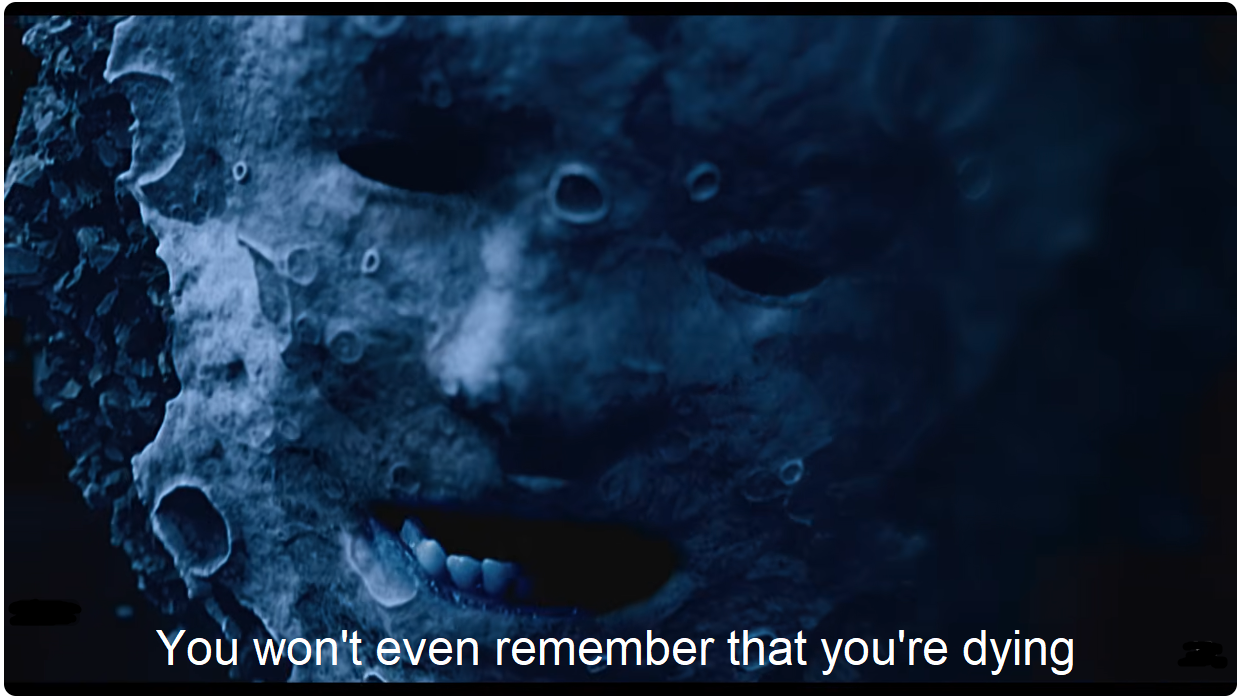
I Saw the TV Glow, Jane Schoenbrum, 2024
Clark is only trapped in the backrooms in the sense that he would prefer to fester there, and also make it everyone else’s problem. Kat and Bobby are dead either due to his negligence, or he killed them directly because his alter-ego is him. Reinsve’s very satisfying line “you are your fucking brain you dipshit” leads me to favour the latter.
I liked Mary so much towards the end that I have to insist that she’s not dead or melting into a chair somewhere deep in the backrooms. Her fate is definitely ambiguous. She is not free at the end of the film, either physically or mentally, and being detained in an Async facility is not a particularly encouraging sign. But she’s not trapped in the backrooms either - or only in the sense that any of us are. The ending gave me everything I needed, but if I’m being real they probably left it pretty open for the sake of continuing the franchise.
As much as I loved this film I kind of want Kane Parsons to get heaps of money to do something completely unrelated to backrooms, but he’s only 21. He'll make it out.
