Fuck me sandals for the straight man
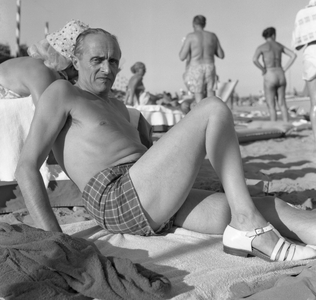
French director Rene' Clair, Lido beach, Venice, 1958
Whatever happened to Gary Cooper?
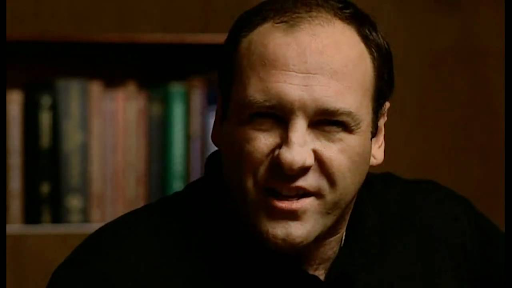
Tony Soprano, The Sopranos s01e01
When Tony Soprano invokes Gary Cooper it is to lament the loss of the strong, silent type who “wasn’t in touch with his feelings and just did what he had to do”. Gary Cooper wouldn’t have gone to therapy or identified with a minority group or worked through trauma. For Tony, Cooper’s stoicism on screen is the archetype of what an American man should be.
The discerning straight man would do well to look towards Gary Cooper for inspiration, but not for the same reasons as Tony Soprano. I too wonder what happened to the Gary Coopers of this world, but my train of thought is “why don’t men look like that anymore?” The answer is not seed oils or tongue posture. I don’t care if you aren’t 6’3, if you don’t have the hairline, if you don’t have the jawline. You still have much to learn from Gary Cooper.
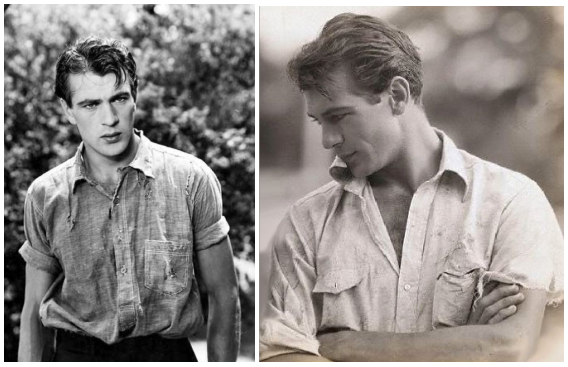
Gary Cooper in The First Kiss (1928)
Lesson one is be bisexual. I’m just kidding you’re allowed to be straight, but please stop doing gay panic.
Lesson two is look at these outfits. Below we have Cooper with John Wayne in Acapulco in 1953. Cooper wears little plaid shorts. A light-coloured guayabera (the shirt) with traditional four-pocket detail at the hem sets off his deep tan. The eye follows his shapely legs down to well-turned ankles delicately bound by the strings of his espadrilles. John Wayne rips a cig.
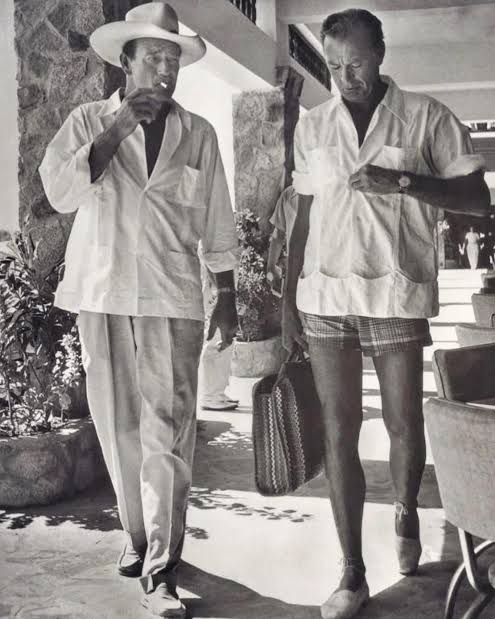
John Wayne and Gary Cooper in Acapulco, Mexico 1953. Photographer Phil Stern
Here we have a more weathered Cooper in 1956 in the French Riviera, still delivering lethal levels of outfit. The little shorts are gingham this time and his shirt is tied at the waist. He wears simple leather sandals with straps crossed over the toes and a buckled strap around the ankle. The woman in the background is his wife Rocky, who also looks chic, but that’s not what we’re here for.
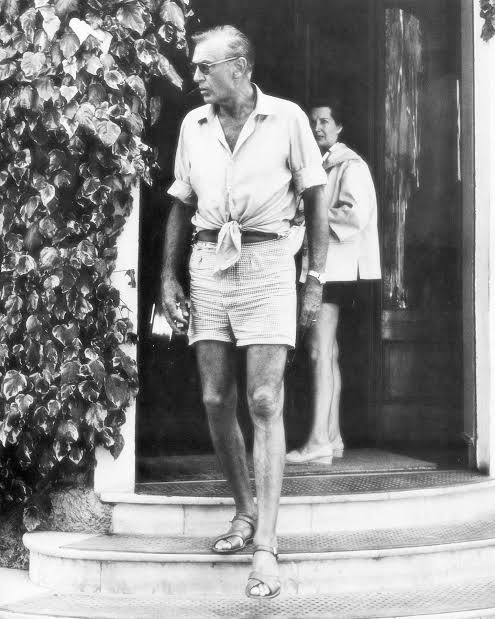
Gary Cooper at Hotel du Cap-Eden-Roc, France, 1956. Photographer Edward Quinn
To the modern eye, these outfits send enough mixed signals to whip instagram commenters into a lather. The men are foaming. They’re outraged on behalf of Tony Soprano. The knotted shirt seems to be particularly threatening, with one commenter seething “it's about as weak as you could possibly appear”.
“C’mon Gary, what is this BS?”
“More like Gay Cooper”
The women in the comments are mostly swooning. Debi Mazar gives it the 100 emoji.
“How necessary to have men like these around. Where are they?”
“What a set of ‘gams’ vavavoom”
“Handsomest man who ever lived”
We seem to have reached an impasse. Men think that it’s weak to be desired and that making women horny is gay (btw has anyone heard any discourse about birth rates lately?). Since the Gary Cooper era it’s somehow become contemptible to look like a beloved and extremely desirable movie star on holiday. Gary Cooper fucked (arguably a bit too much - it’s rumoured that his marriage was only saved from years of philandering by an audience with Pope Pius XII). Who cares if it was men or women - but if you do care, there were heaps of women! If you’re disgusted by the thought of exposing yourself to someone else’s interest or desire, whether it be your legs, midriff, ideas or feelings, how can you ever be anything but lonely and resentful in this world? It’s not hard to imagine men rendering themselves repellant to women because of “no homo”.
There’s no easy answer to this. Actually yes there is, it’s some nice summer shoes. Cute sandals won’t necessarily fix everything, but they’re a step in the right direction. Go out into the world with your ankles showing. Maybe wear a little t-shirt with the sleeves rolled up. Become obsessed with an item of clothing from an old photograph and have a personally enriching journey trying to recreate it. Young men need hobbies. Start spreading some joy in the world instead of wearing ugly shoes and visualising physical conflict scenarios every time you leave the house. You are brave and strong.
Sandals?
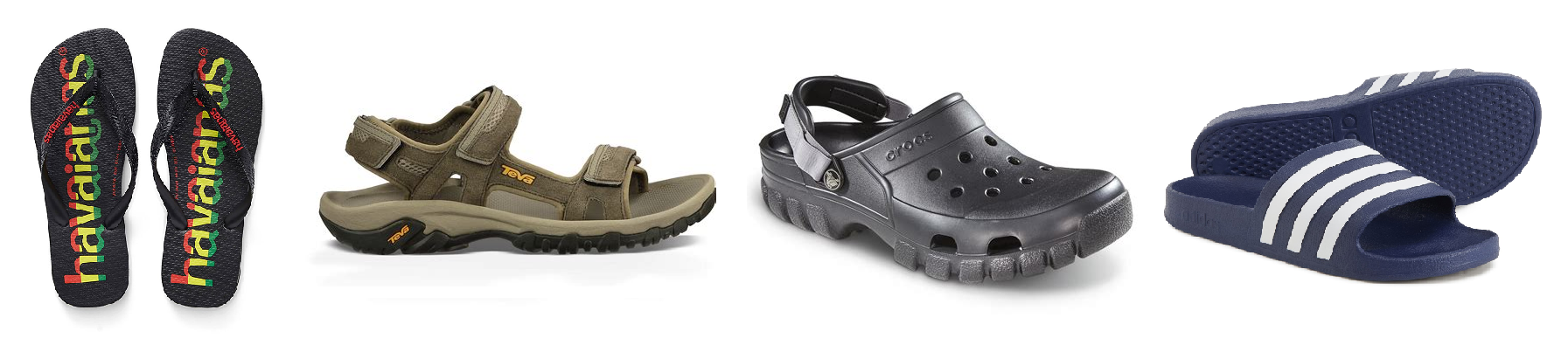
If you’re a man in the neighbourhood of heterosexuality you can probably think of a few different types of sandals. There’s the plastic family - jandals/thongs, crocs and slides. Then there’s the outdoor kind, also mostly plastic, featuring adjustable straps, velcro and athletic soles. If you’re from New Zealand, Australia or England you might have worn sandals as part of your school uniform (if this is the case they may have juvenile connotations for you, but rest assured sandals are for men as well!). If you’re slightly more fashion-forward you might be familiar with roman sandals and Birkenstocks. The Birkenstock clog in particular seems to be having a moment amongst the young and trendy. These are all ok. There’s a time and a place. But if your heart is open we can go far, far beyond what you currently know.
Look at the spectrum of shoes below:
Now consider the kinds of sandals seen in western menswear for much of the 20th century:
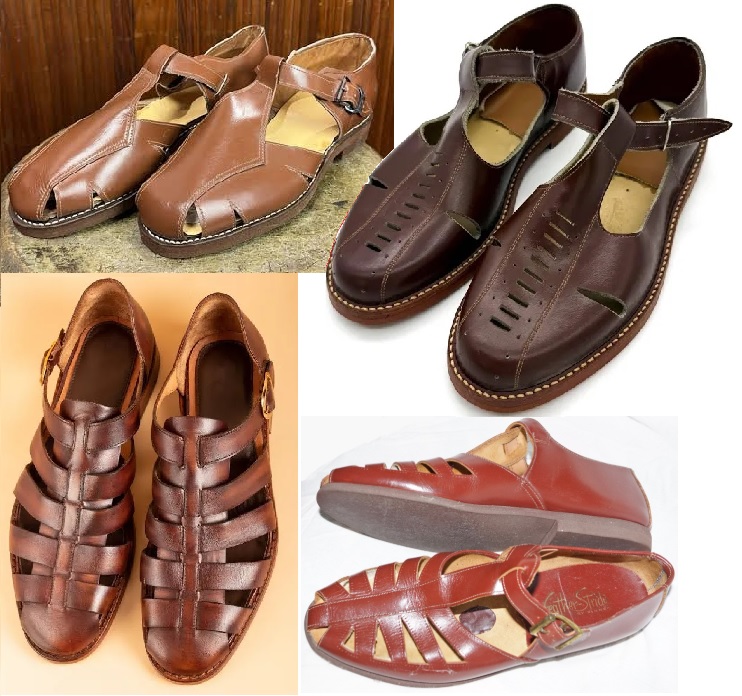
If this is a lot to take in, just sit with it. Notice how these examples are all based on the shape of a traditional men’s dress shoe with a closed toe, yet there is much variety in the construction and detail. Top left has some interesting angular shapes in the leather with a gap all the way down to the instep and a strap connecting the heel. Top right is really similar to a pair of vintage 1960s Doctor Marten sandals I found (but they weren’t photographed nicely). The decorative broguing on the upper adds some nice texture. Bottom left is more strappy, but still follows the form of a closed shoe. Bottom right is the most simple, resembling an oxford shoe with some of the leather cut away.
If you don’t like any of these, don’t worry about it, this is just a starting point and we’re going to cover more ground. I also don’t expect you to source vintage 1970s sandals on Ebay (but if you do, send me some photos).
Sandals!
If you’re interested in a comprehensive text about the history of sandals, Ruth Turner Wilcox’s The Mode in Footwear (1948) is an amazing reference book that sets out to record “all the known shoe designs”. Suffice to say humans have been making sandals out of wood, bark, plant fibres and animal skins for a very long time. Styles from thousands of years ago still influence fashion today.
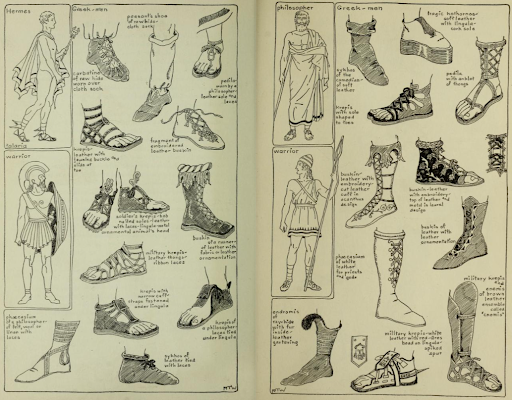
The Mode in Footwear ends at the 19th Century (unless there’s an updated edition I don’t know about). For examples of styles from the 20th century vintagedancer.com is a good resource.
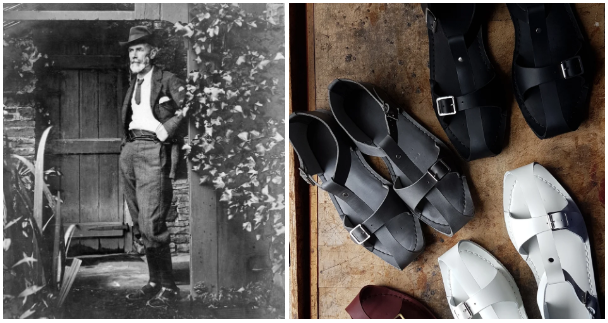
I do want to skip ahead to the 20th century, but I feel like I’d be remiss not to mention Edward Carpenter first. Carpenter was a pioneering figure in the gay rights and socialist movements in England in the 1880s-1920s. He was also a poet, cyclist, vegetarian and famous wearer of sandals. He’s credited with popularising sandals in England - or at least amongst bohemian progressive types. Carpenter had a friend bring him some sandals from Kashmir, which he recreated after taking lessons from a bootmaker. I can’t find any source that says he innovated beyond the Kashmiri originals and I’m not overly enamoured with the style, but if you like them they’re easy to find (search “Edward Carpenter sandals”).
Anyway, for most people in the western world sandals took off in the 1930s with the advent of casual wear. Before then oxfords ruled for men with saddle-shoes as the casual alternative. In this ad 1938 you can see a trajectory from traditional shoes with broguing added for ventilation, to adding a T-bar, to adding more straps, and finally on the far left, straps only:
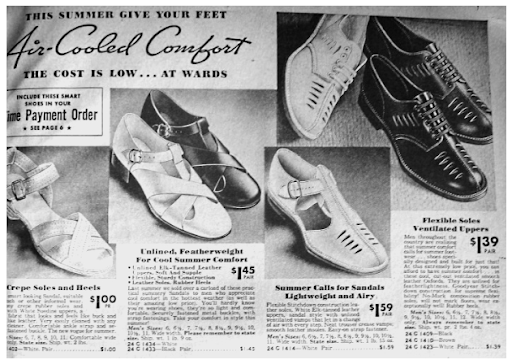
For me the two styles in the middle are the most interesting. I have never seen men wearing shoes like that and I would like to. The combination of the formal shape of the shoe and the lightness of the cutouts is incredibly graceful to me. I’d love to wear them too and I might have some luck sourcing something similar amongst women’s styles, but where on earth would you find these for men now? I’m a bit fixated on that particular look because I feel like it may be lost to a bygone era, but there are lots of other styles that became popular in the 1930s, including espadrilles, huaraches and fisherman sandals. More on those below.
Sandalsss
Some notes
There’s a lot of inconsistency in names for different styles. I have not researched the most correct name for everything, rather I’m attempting to give you the right keywords if you want to seek something out.
I’ll try to avoid suggesting things with straps that go between the toes. This is a matter of comfort, and also toes can be kind of weird (mine included!) so you might prefer not to draw attention to them.
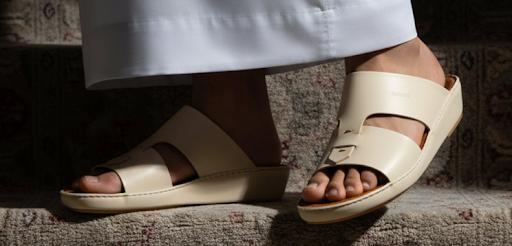
I’m not going to talk about gulf/emirati sandals, I think they’re fine but they’ve already had a big moment in fashion and have high-end connotations that I don’t really care for. I feel like sandals should be for the people.
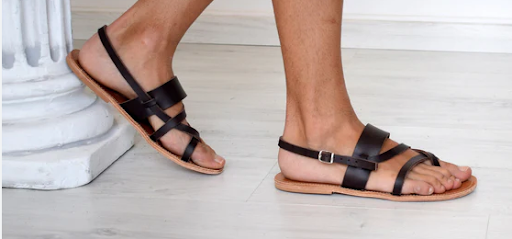
- There’s a whole thing about biblical/Jesus/Jerusalem sandals being a symbol of Zionism. If you want to wear them I wouldn’t worry too much, they’re kind of just another pre-existing thing that Israelis ripped off to manufacture their national identity. You’ll find a range of styles sold under those names and they’re mostly pretty generic strappy sandals. Just check BDS compliance for wherever you buy them from and if you want to avoid dressing like an actual Zionist settler, don’t wear them with a white shirt and blue pants.
All the examples I’m going to show you are probably leather, but these are for inspo only and leather alternatives are out there for those who seek them.
I’m not specifically into feet sexually, but it’s really, really boring when people act like all men have gross feet. They’re usually fine, and the whole thing about sandals is that they do some nice concealing/revealing to make the foot look a bit more aesthetic. Let’s begin.
Fisherman Sandals
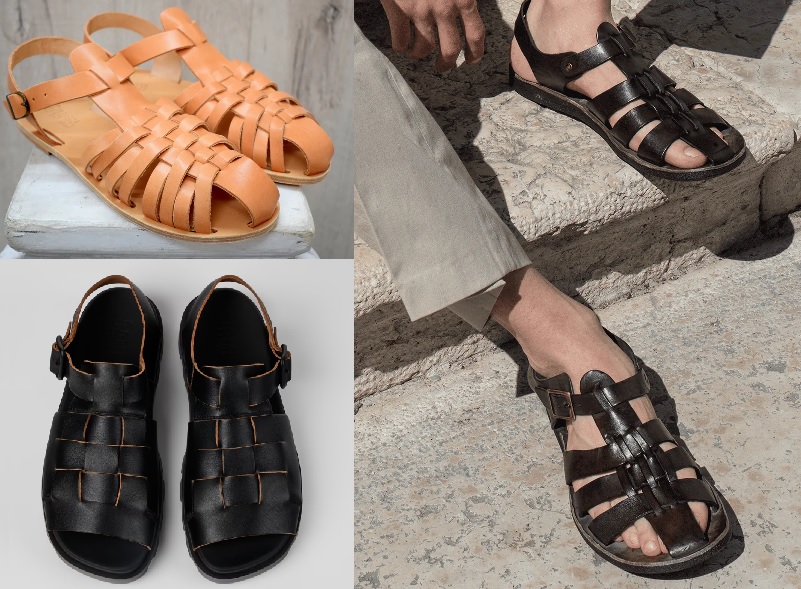
Clockwise from left: SpartaSandals on Ebay, Brador, Camper.
These are a great stepping-off point. What could be more rugged and manly than thousands of years of seafaring tradition? This is a really classic and functional style that you can find many variations of. You can show less or more foot, or go for a more formal or casual look. When I think of fisherman sandals, I’m looking for that central piece of leather that has the other straps woven though it in a cage-like shape, plus an ankle strap. The heel may be closed or open.
Sex appeal: 🔥🔥🔥
Avarcas
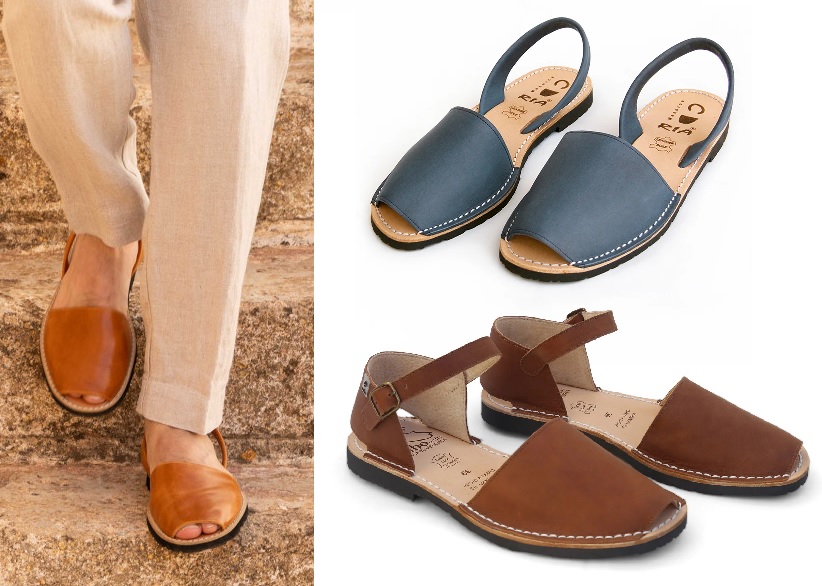
Clockwise from left: Minorquines, Ria Menorca Australia, The Avarca Store
Also known as Menorca sandals after their island of origin. Traditionally a shoe for peasants and farmers, Avarcas were updated to a lighter and more stylish version for tourists in the 1950s. Today the Avarca name is protected and any shoe named “Avarca” must meet a standard set by the Island Government of Menorca and the Association of Menorcan Footwear Manufacturers. Avarcas are kind of like a slide with a slingback heel strap. Some variants have another strap circling the ankle with a buckle. These are a lovely casual shoe and a really non-threatening way for you to integrate a flirty slingback into your look.
Sex appeal: 🔥🔥
Franciscan and Benedictine Sandals
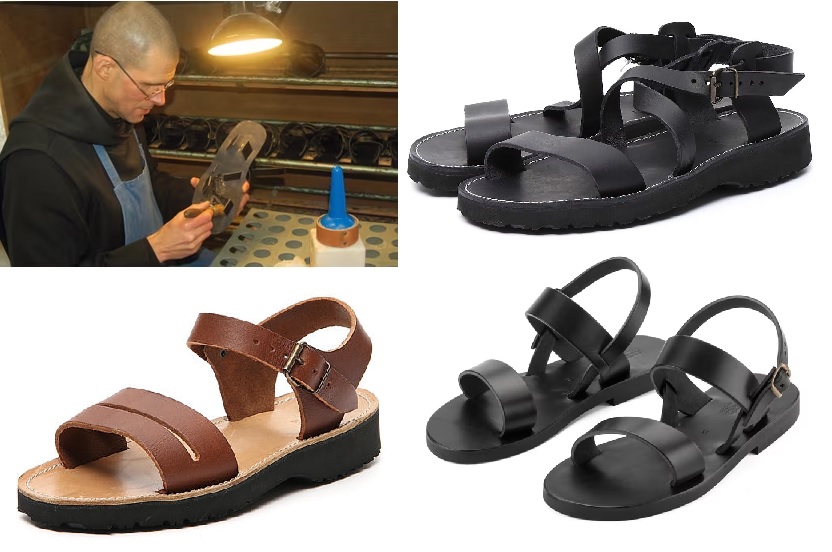
Clockwise from left: A monk making sandals at Sainte Marie de la Garde monastery, Benedictine sandals at Northeast Church Supplies, Benedictine sandals at Manufactum, Franciscan sandals at HolyArt
These aren’t a specific shape or form of sandal, but if you like something very classic, simple and well-made you’ll find it here. Some Franciscan orders were traditionally discalced (barefoot) and sandals are not considered to be part of the Fransican habit, but footwear is allowed for practicality. St Benedict allowed for shoes or sandals in his followers’ garb. The sandals worn and produced by these orders embody the humble austerity that one would expect from those who have renounced worldly things. To my eye they have the quiet beauty of anything handmade. In a similar tradition but perhaps less niche to source, see also the Pacific sandal by Paraboot, originally designed for Carthusian monks who spent a lot of time on their feet making liqueur and going on pilgrimages. Secular interest in monastic life probably ebbs and flows with popular culture and I’d imagine that 2024’s Conclave was a high point. I don’t remember seeing any sandals in that film, but I do remember how good Stanley Tucci looked in his vestments. Josh O’Connor also looks good in the new Knives Out movie. I’m just saying I think it might be a good time to wear something that suggests you may have some connection to a holy order. It’s a little mysterious, it’s chic, it’s sexy.
Sex appeal: 🔥🔥🔥🔥
Huaraches
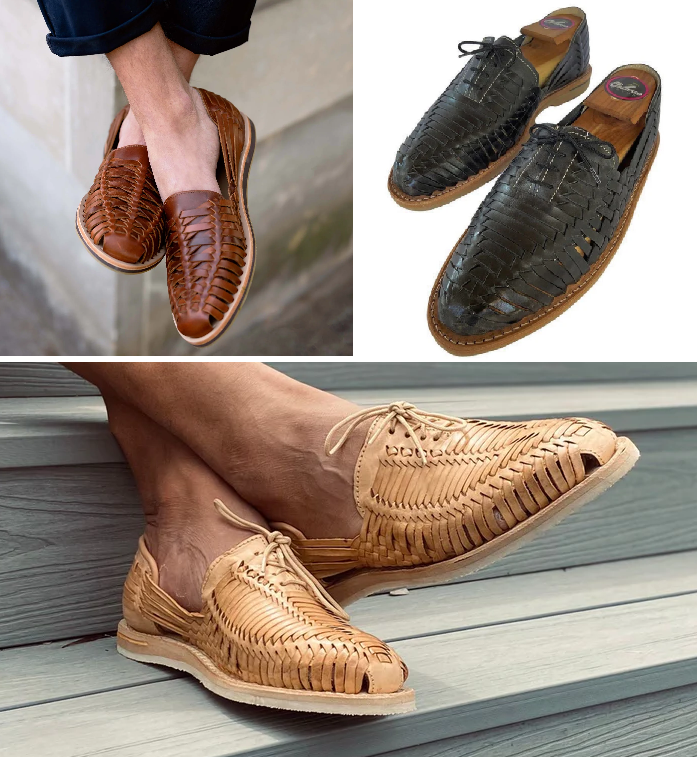
Clockwise from left: Nisolo, Colores Decor, BellaRosaMexico
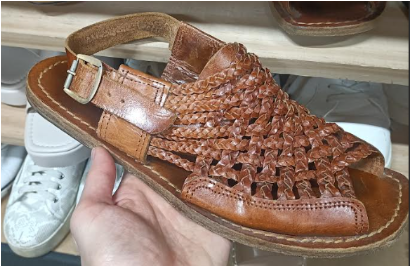
The huarache originated in pre-Colombian America, evolving over time with the availability of new materials. Shoes can only be considered traditional huaraches if they are handmade and have a woven-leather form in the upper. It’s still very possible to buy huaraches handmade by Mexican artisans and they’re pretty gorgeous (see above). I love to see some woven or braided leather detail on any kind of sandal and I’m guessing it’s the huarache influence that I can thank for that. Here’s some I saw in an op-shop recently, it’s such an interesting texture and attractive use of the material. The effect is both sophisticated and easy-breezy and I bet these are comfortable enough to convert some grizzled sceptics.
Sex appeal: 🔥🔥🔥
Gurkha Sandals
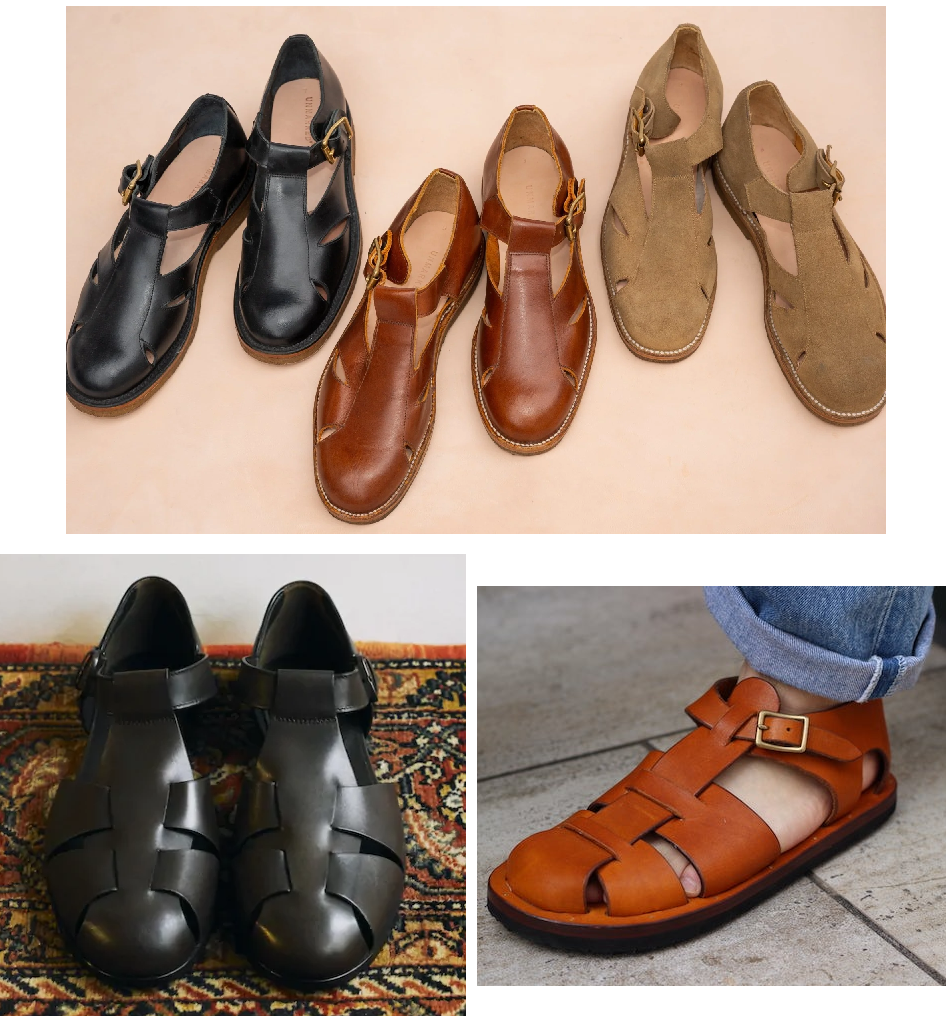
Clockwise from left: Unmarked, Blue Works Vintage Clothing Store, Tod’s Japan
This elegant and practical style is based on military footwear worn by Nepali soldiers in the 19th Century. The form is kind of similar to a fisherman sandal, with straps over the foot connected to a central piece, but more enclosed and with fewer straps. This is a serious and respectable shoe. I find the vibe is a bit GQ and there’s not a lot of coquetry going on here, but it’s not all about me. These are a handsome and versatile option.
Sex appeal: 🔥🔥
Peshawari Sandals
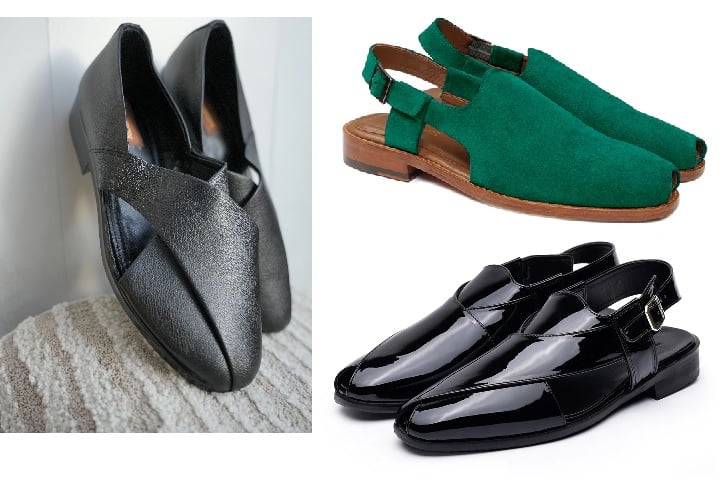
Clockwise from left: Boutique Nepal, Voga-Now, Shutiq
The traditional Peshawari Chappal has two wide straps crossed over the foot with another strap around the ankle and a buckle. For my tastes, the subcontinent is the goat when it comes to sandals for men. I don’t think slingback loafers could exist without the stylistic influence of Peshawar. There’s so much to like here. The sleek form of the shoe tapers towards a toe that can be fully enclosed or have a little cutout. The little heel is so elegant and the open back is quite thrilling. Business up front, party at the back. If I’m being realistic I know these are a hard sell - between the potentially narrow fit and the features that read as feminine in western fashion, I don’t expect guys to start swapping their Vans for these. Consider it an advanced challenge.
Sex appeal: 🔥🔥🔥🔥🔥
Sources
https://www.thevintagenews.com/2022/05/03/gary-cooper-life/
https://vintagedancer.com/vintage-retro/mens-vintage-style-sandals/
The Mode in Footwear, Ruth Turner Wilcox, 1948
https://www.cabinetmagazine.org/issues/20/laity.php
https://www.avarcasaustralia.com.au/blogs/default-blog/history-of-avarcas-sandals-menorca
https://www.mountangelabbey.org/breaking-down-the-habit/
https://www.heddels.com/2018/07/the-untold-story-of-huaraches-mexicos-native-sandal/
https://en.wikipedia.org/wiki/Peshawari_chappal